
Places

Places are crucial cultural signifiers. Our knowledge about American antiquities is ‘situated’ not only in an ideological-political sense but also in a geographical one. Landmarks are orientations for travelers and explorers but also carriers of collective memories and oral traditions while colonial maps are indispensible instruments of conquest. Conflicts in settler colonies are predominantly about ownership and stewardship of land, as the essays in this section illustrate.
National Parks and American Antiquity

National Parks and American Antiquity

“The National Park Service invites you to discover American history in all its diversity, from ancient archeological places to the homes of poets and presidents to the sobering stories of Civil War soldiers and civilians to the legacy of a courageous woman who refused to give up her seat on a bus. Our history is part of who we were, who we are, and who we will be.” The National Park Service (NPS) in the United States – from whose website this quotation was taken – will celebrate their centennial in August this year. Over the last 100 years, the institution created confined spaces for the experience of American history and thereby also provided an institutional background for the construction of an American antiquity. However, how history, and specifically antiquity, was constructed in National Parks (NPs) has changed over the last 100 years. The following article will outline some of the developments during this timeframe in order to create a picture of how institutions like the NPS could influence the construction of American antiquity. read more...

Mount Coffin

Mount Coffin

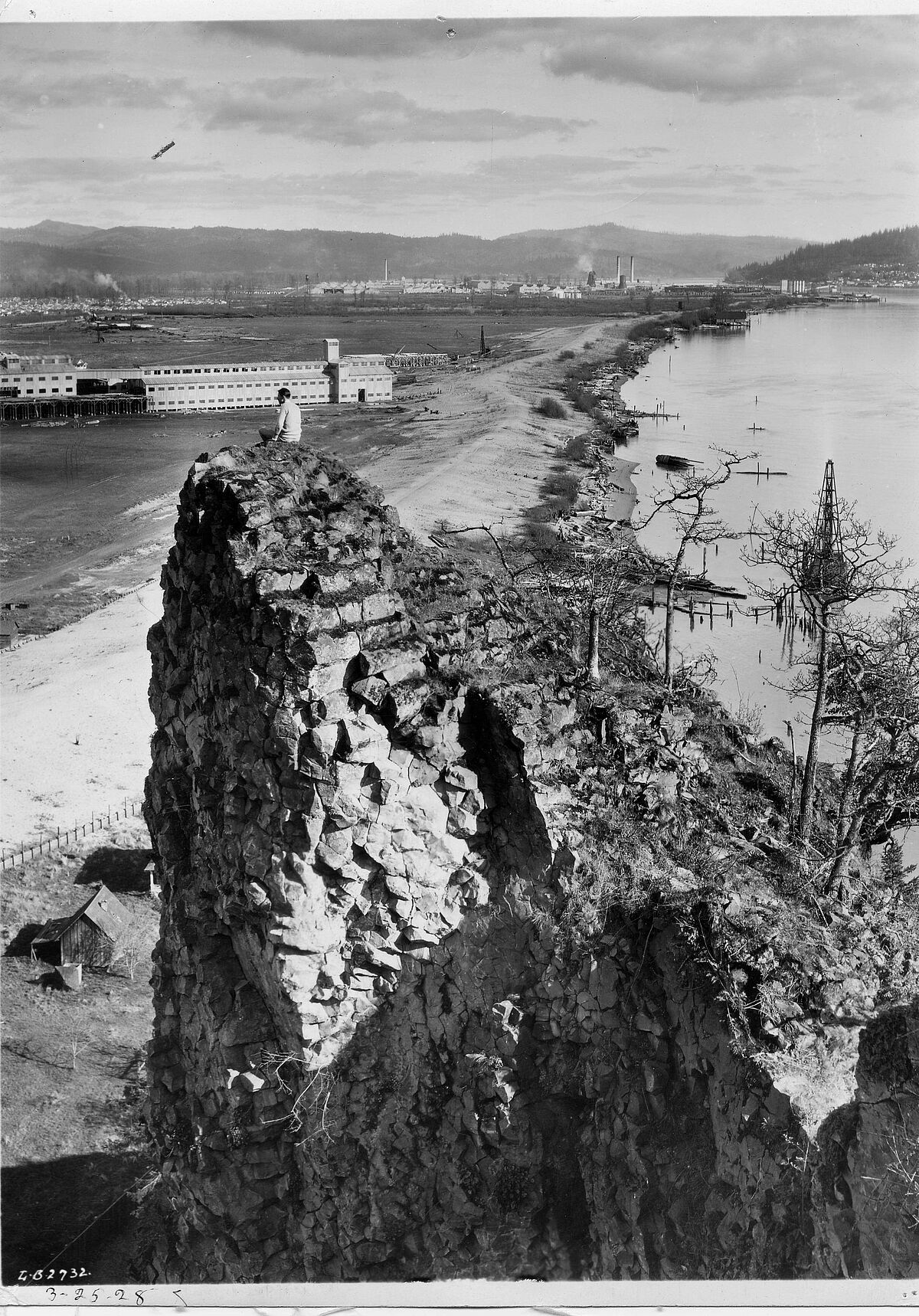
Mount Coffin was a once approximately 250-foot-high rock on the riverbank of the Columbia near the city of Longview, Washington State. It served as a burial site for the local indigenous population, the Cowlitz people. The rock was first described by Lieutenant William R. Broughton in 1792, who named it Coffin because of the dead bodies posited in canoes on the rock’s summit. Because of its striking features, Mount Coffin was an important landmark for indigenous people and early Western explorers such as Meriwether Lewis and William Clark. In the 20th century the former landmark was turned into a rock quarry, completely levelled in the 1950s, and has been used by the Weyerhaeuser Company as industrial area ever since. The slow destruction of Mount Coffin and the replacement of this geographical landmark by ‘colonial landmarks’ —such as factory buildings and logging bridges—illustrate the different ways of claiming, shaping, and stewarding land by indigenous and colonial agents. read more...

Naming Mountains: Denali vs Mount McKinley

Naming Mountains: Denali vs Mount McKinley

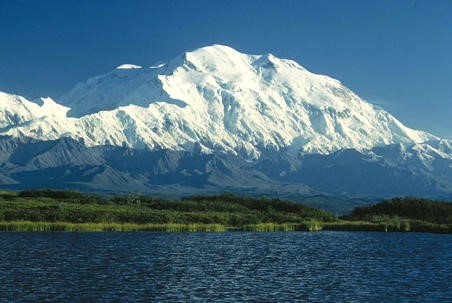
On August, 30th 2015 the Obama administration approved the change of name of the highest mountain in Alaska from Mount McKinley to Denali after a decade-long hold-off by Ohio representatives in the United States Board on Geographic Names. Denali had been named Mount McKinley by a gold prospector in 1896 after the presidential-candidate William McKinley, ignoring the indigenous name Denali that remained popular in the local area until today. As the decade-long struggle on the highest political level shows, naming is a process with deep political, social and cultural consequences. In the end, the dispute was decided in favor of a renaming by a powerful coalition of indigenous groups and state politicians. Politicians on the national level were no longer able to combat the process of decolonizing the highest mountain in Alaska. read more...