Artifacts

We take a generous view of the term “artifact” in that this section also contains non-artificial ‘stuff’ if it can be shown to have been included in man-made epistemological structures – like stories, theories, museums, etc. Human bones, for example, become artifacts in the process of being included in people’s meaning-making machine.
'Tiere der Urwelt' Trilogy

'Tiere der Urwelt' Trilogy

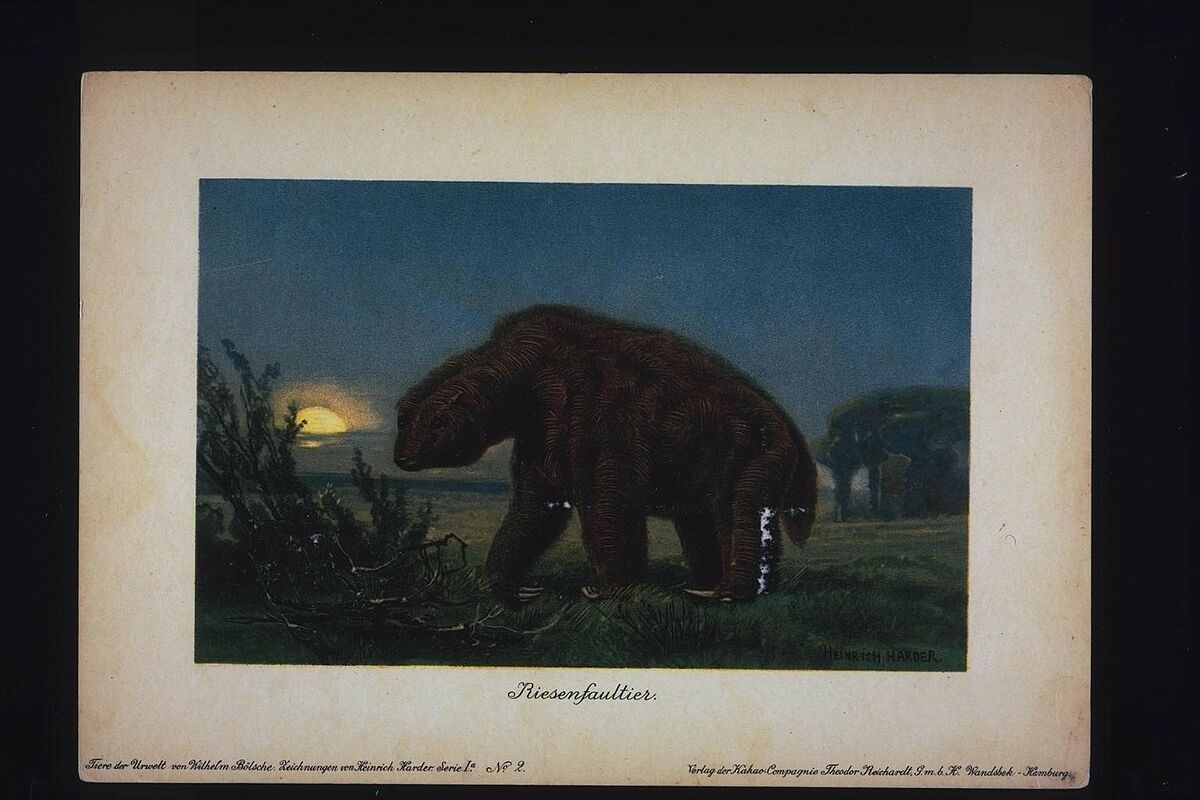
Trading cards were omnipresent in the popular culture of Germany before the First World War. Stollwerck, the leading producer of trading cards, alone distributed 200 million cards between 1896 and 1899. Trading cards usually combine visual representations on the front with textual content on the back and some sort of advertisement by the producer – mostly companies associated with colonial products. The trading card series Tiere der Urwelt ("animals of the primeval world") was produced by the Theodore Reichardt cacao company, painted by Heinrich Harder, and written by Wilhelm Bölsche ... read more

Sacajawea: Comments on the Website cover image

Sacajawea: Comments on the Website cover image

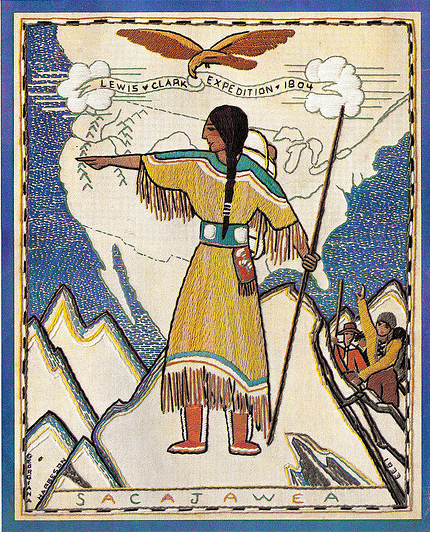
Our cover image reproduces a needle art tapestry by Georgiana Brown Harbeson (1894-1980), entitled “Sacajawea” and published as the cover of Needlecraft. The Home Arts, a magazine for needle art, in July, 1933. Harbeson was a pioneer of modern needlework which appeared on many magazine covers in the 1920s and 1930s. She also produced oil paintings with pastoral motives. Harbeson raised needlecraft to a real art form ... read more

A T. Rex named Sue

A T. Rex named Sue

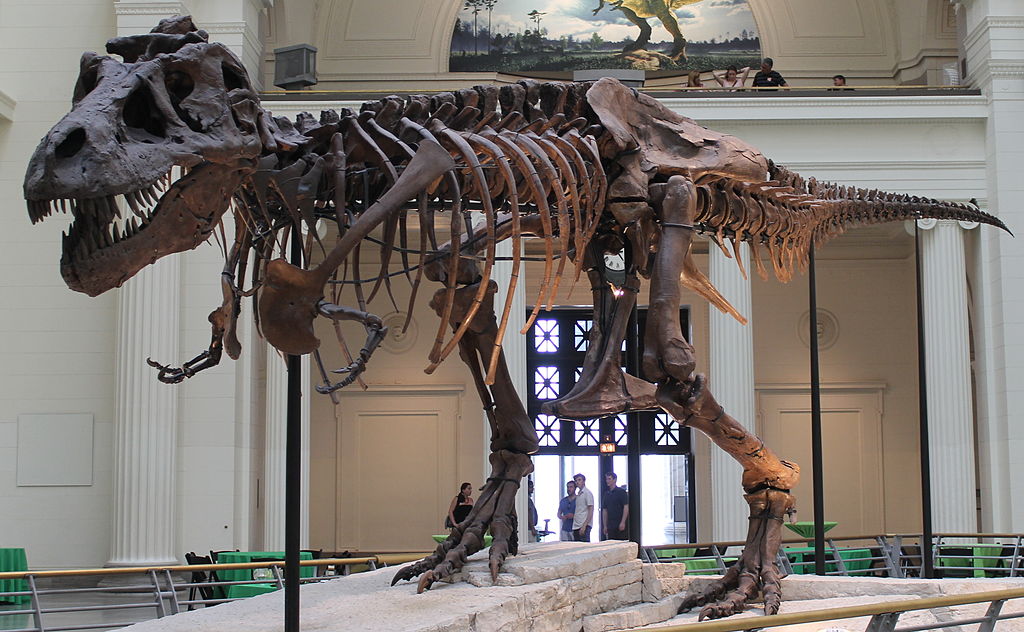
Sue holds a rather dubious world record: 85%. She is currently first place on the list of the most complete specimina of Tyrannosaurus rex with 85 per cent of the bones preserved and found. Named after her discoverer, Susan Hendrickson, she is currently preserved in the Field Museum in Chicago. But Sue is more than a collection of bones. 67 million years ago, she was once a living animal. After her death, she became conserved in mud and stayed there until 1990, when she was unearthed, named, fought over in court, examined, sold and displayed in various ways ... read more

Kennewick Man / The Ancient One

Kennewick Man / The Ancient One

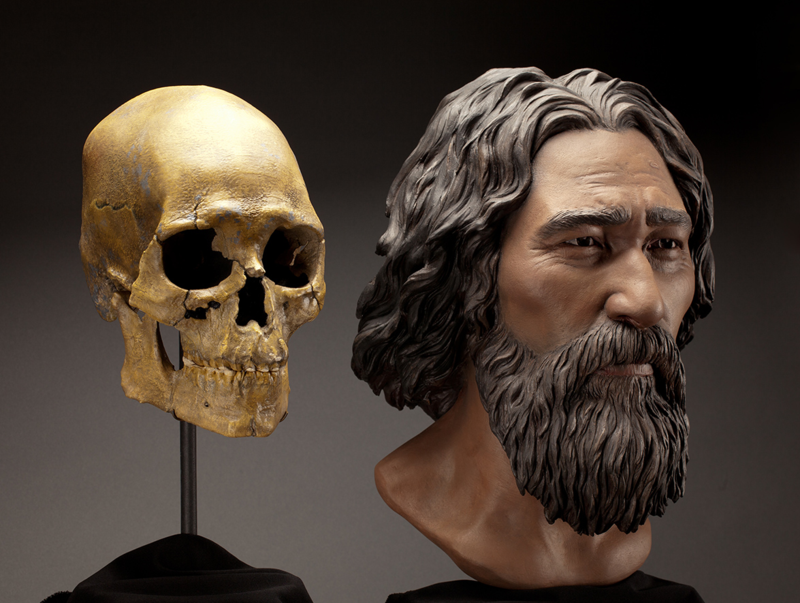
Kennewick Man—among Native Americans known as the Ancient One—is a name for the skeletal remains of a male Homo sapiens discovered in the State of Washington, USA, in 1996. Studies based on radiocarbon dating suggest that Kennewick Man died around 8,400-8,690 calibrated years before present. Because the remains of Kennewick man were in such excellent condition and almost complete, this skeleton opened many doors to the further understanding of not only the migration patterns by the earliest humans, but also geological conditions dating far into the past ... read more